
Global info

More
Illustration of a tarot card reading with the Airbnb logo overlaid, representing predictions for the Airbnb Summer Release 2026.

airbnb Summer Release 2026: Our Predictions, and What Property Managers Should Prepare For

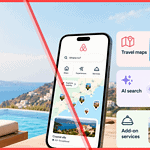
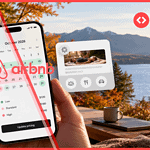
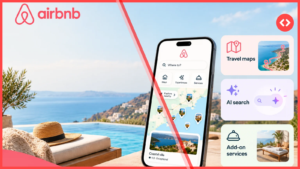
TL;DR: Airbnb’s 2026 Summer Release will be the clearest signal yet that the company is operating as a lifestyle platform, not a travel one — and it will systematically platform the services professional managers already provide. Expect in-home services (grocery stocking, gear rental, baby equipment), a host-side AI stack with a third-party tools marketplace, a loyalty framework preview building on the live 20%-for-visibility test, and a renter-facing push for Airbnb-friendly apartments. Every service Airbnb absorbs is one fewer differentiator for operators.

AIRBNB NEWS

More

ARTIFICIAL INTELLIGENCE

More
Person holding a smartphone displaying an AI loading screen and the Airbnb logo, illustrating the new Airbnb AI strategy.

What Airbnb’s New Privacy Terms Reveal About Its AI Plans for Summer 2026

In a quiet February 2026 privacy policy update, Airbnb legally secured the rights to use host data to train its proprietary machine learning models. Effective April 20, this legal shift forms the foundation of the new Airbnb AI strategy ahead of the highly anticipated Summer 2026 product release. For professional property managers, the stakes are critical: the booking data and pricing behaviors they generate are now formally feeding the AI engines that will ultimately dictate their search ranking and visibility.

A close-up of a smartphone displaying a long, detailed travel prompt in Google AI Mode, demonstrating how users interact with AI vacation rental search to find highly specific, intent-driven experiences.

The Google Goliath: Guests Are Using AI Vacation Rental Search (Even If They Didn’t Ask To)

TL;DR- The shift to AI vacation rental search is turning into a forced cultural shift driven by Google. In a recent live session, Uvika Wahi demonstrated how Google has replaced the traditional “ten blue links” with an AI Overview by default. Travelers no longer have to seek out AI assistance to plan a trip; Google is synthesizing reviews, maps, and property details into a single interface before a single link is clicked. Property managers must realize: visibility no longer means ranking first on a search page, it means being the primary source for AI synthesis.

A digital interface showing Perplexity's Comet autonomous browser and AI assistant overlaying a webpage to summarize its content, illustrating how AI travel booking agents scan and extract information for travelers.

The Browser is the New OTA: How AI Travel Booking Agents Are Killing the 100-Tab Trip Plan

TL;DR- AI agents are shifting the travel booking experience on the internet from manual browsing to autonomous synthesis. Thibault Masson demonstrated this live using Perplexity’s “Comet” browser, showing how an AI agent can take a vague prompt and autonomously navigate the web, check flight routes, compare Airbnb listings, and present a final comparison table without the user ever touching the keyboard.

A traveler holds a smartphone against an airplane window looking out over a sunset, with a digital blue circuit board pattern and a red PriceLabs icon overlaid on the image. This visual represents the intersection of artificial intelligence, digital technology, and the modern short-term rental booking journey.

Are You Listing a Property or Solving a Problem? The Reality of AI Short-Term Rental Marketing

TL;DR- AI is fundamentally changing how guests discover and book stays. Instead of searching for inventory (like “3 bedrooms”), travelers are using conversational AI to find specific outcomes based on the “Jobs-to-be-Done” framework. Lake.com CEO David Ciccarelli highlights that AI tools in “Agent Mode” now act as autonomous travel assistants, scraping direct websites and OTAs to compare amenities, pricing, and cancellation policies. To stay visible, property managers must shift from selling physical features to solving guest problems, ensuring all listing data is machine-readable for these new AI agents.

Chat mode provides summaries and suggestions. Agent mode can navigate websites, compare listings, extract pricing, and evaluate cancellation policies autonomously.

What Happens When AI Becomes the First Step in Booking a Stay?

TL;DR- AI travel booking is compressing the discovery funnel. Instead of browsing and comparing listings manually, guests now describe full travel scenarios to AI tools, which instantly synthesize reviews, amenities, pricing, and policies.

REVENUE MANAGEMENT

More
Dubai skyline representing the 2026 short-term rental market disruption following the US–Iran war

Dubai Short-Term Rental Market 2026: Tourists Gone, 29+ Day Stays Tripled

TL;DR: Dubai’s short-term rental market has temporarily stopped being a tourist destination. Following the outbreak of the US–Iran conflict in late February, demand for 29+ day stays more than tripled year-on-year as displaced residents and expats replaced leisure travellers. Occupancy has collapsed to 17% and RevPAR to $22. But while operators have slashed rates through August to capture this new regional demand, Q4 pricing sits untouched at peak-season levels — a bet on winter recovery the forward data does not yet support.

Featured graphic for the article illustrating the impact of the Celine Dion Paris concert on short-term rental booking trends.

Celine Dion’s Paris Concerts Are Filling Calendars Five Months Early — Here’s What the Data Shows

TL;DR: Paris vacation rentals for mid-September are already pacing up to 30% ahead of last year’s occupancy. The catalyst is Celine Dion’s 11-show residency (Sept 12–Oct 17), an event that drew an astonishing 9 million ticket registrations for just 330,000 seats. As fans secure tickets, PriceLabs data reveals a 50% relative surge in single-night stays booked over the last seven days. To capture the true revenue upside, property managers must act immediately: set multi-night minimums (3+ nights) to block calendar fragmentation by short-stay concertgoers, and push rates upward before mid-market inventory sells out.